
7 Signs Your Skin Barrier Is Damaged — And Exactly How to Fix It
Affiliate disclosure This article contains Amazon affiliate links. If you purchase through these links, I earn a small commission at no extra cost to you. I only recommend products I genuinely believe in.
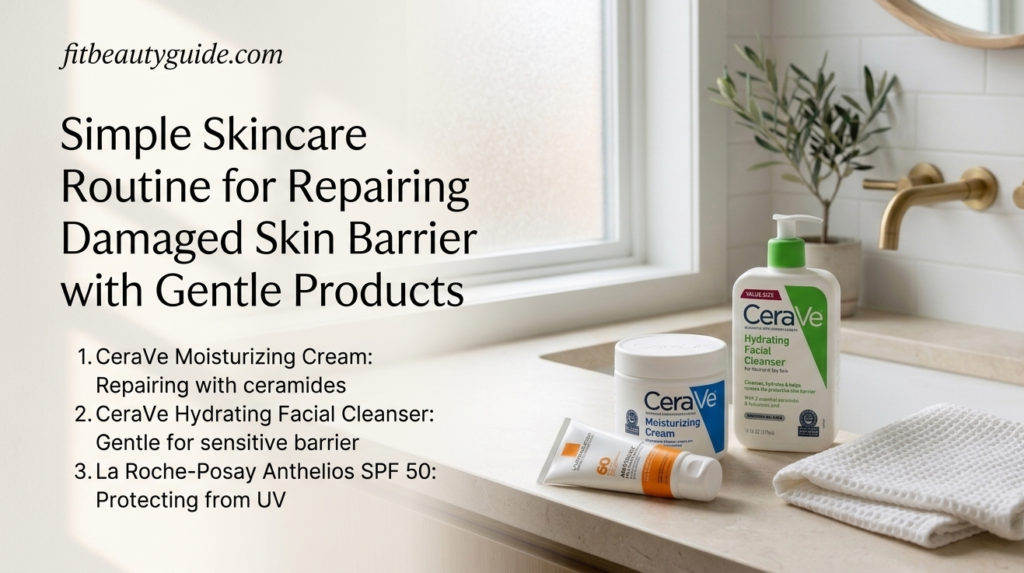
If your skin suddenly feels tight, sensitive, and reacts to everything — your skin barrier might be damaged.
Here’s exactly how to recognize it, fix it, and rebuild your skin the right way.
Quick Answer: How to Fix a Damaged Skin Barrier
– Stop all actives (retinol, acids, vitamin C)
– Use a gentle, non-stripping cleanser
– Apply a ceramide-rich moisturizer twice daily
– Wear SPF every morning
Stick to this routine consistently for at least 4 weeks.
“Skin barrier repair” is one of the most searched skincare topics of 2026. Which is both encouraging and a little alarming — because if that many people are searching for it, that many people have probably damaged theirs. I was one of them.
About eighteen months ago, I went through a phase of enthusiastically adding actives to my routine. Retinol, glycolic acid, vitamin C, niacinamide — all things that work, all things I was using too aggressively, too often, and in combinations that didn’t make sense together. Within six weeks, my skin was a mess. Tight, red, reactive to things it had never reacted to, and breaking out in ways it hadn’t since I was a teenager.
My dermatologist said two words: skin barrier. I spent the next two months learning everything I could about it — what it actually is, how it gets damaged, and how to fix it. This article is what I wish I’d read before I started.
What Is the Skin Barrier, Actually?
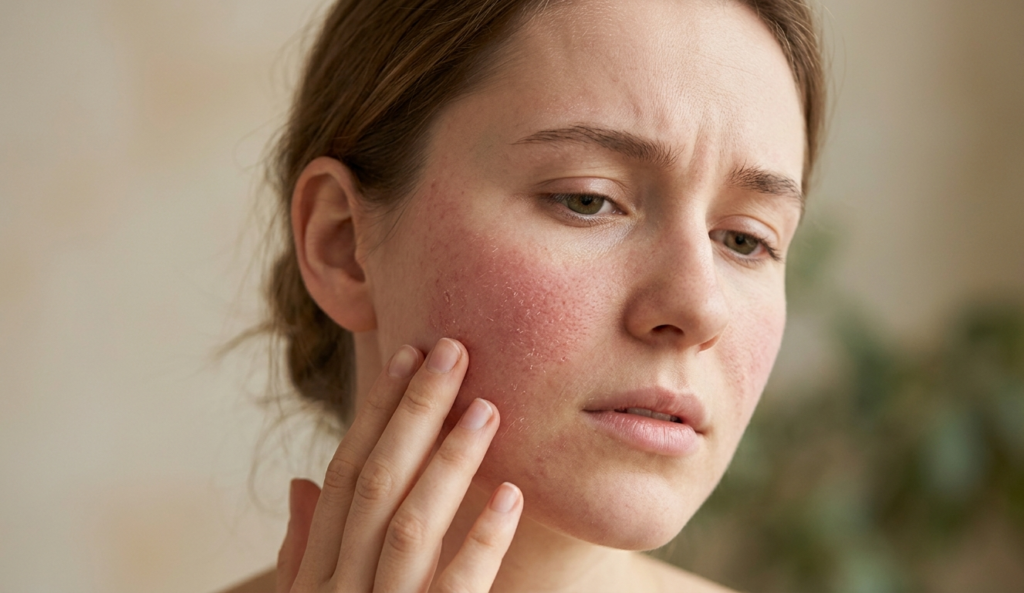
Your skin is made up of several layers, but the outermost layer — the stratum corneum — is what we call the skin barrier. Think of it as a brick wall: the “bricks” are dead skin cells called corneocytes, and the “mortar” between them is a lipid matrix made up of ceramides (roughly 50%), cholesterol (25%), and fatty acids (25%).
This structure does two critical things simultaneously: it keeps moisture in, and it keeps irritants and pathogens out. When the lipid mortar is intact, your skin is hydrated, calm, and able to tolerate the products you put on it. When it’s compromised, those functions break down — and that’s when things start going wrong.
The brick wall analogy : Imagine a brick wall where someone has removed half the mortar. The bricks (skin cells) are still there, but water can seep out through the gaps, and external irritants can get in. That’s exactly what happens with a damaged skin barrier — it’s a structural problem, not just a surface one.
The 7 Signs Your Skin Barrier Is Damaged
1. Skin feels tight even right after moisturizing
This is the earliest sign and the easiest to dismiss. You apply your usual moisturizer, and within an hour the tightness is back. That tightness is trans-epidermal water loss — water evaporating through a compromised barrier faster than hydration can be replenished. When a normal moisturizer stops “holding,” the barrier is usually the reason.
2. Products that worked before now sting or burn
One of the most disorienting signs of barrier damage is when your trusted products start causing problems. The toner you’ve used for six months suddenly stings. Your vitamin C serum — which was fine last week — now burns when you apply it. This happens because a damaged barrier allows ingredients to penetrate too deeply and too quickly, causing irritation they wouldn’t cause on healthy skin.
3. Redness that doesn’t have an obvious cause
Persistent low-level redness, particularly around the cheeks, nose, and chin, can signal barrier damage. The barrier’s job includes protection against environmental irritants — pollution, temperature changes, UV radiation. When it’s weakened, those aggressors trigger inflammation more easily.
4. Increased breakouts despite a clean diet and routine
A weakened barrier allows bacteria to penetrate more easily and disrupts the skin’s natural microbiome — the balance of bacteria that helps maintain healthy skin. The result is often unexpected breakouts that seem unrelated to diet, stress, or anything else you can identify. If breakouts are new, sudden, and clustered, barrier damage is worth considering.
5. Rough, flaky, or uneven texture
Flaking and rough texture that persists despite moisturizing is a sign that the barrier’s ability to retain moisture has been compromised. The outer skin cells are drying and dying faster than they should, creating that rough, patchy surface. It’s different from normal dry skin — it doesn’t fully resolve with a thicker moisturizer.
6. Dullness that wasn’t there before
A hydrated, intact skin barrier reflects light evenly, which is what gives healthy skin its glow. When the barrier is compromised and the skin is chronically dehydrated, it scatters light unevenly — the result is that flat, dull look that no amount of highlighter seems to fix. If your skin has lost its natural radiance and you can’t explain why, check the barrier.
7. Skin that reacts differently depending on the day
Healthy skin is consistent. It behaves roughly the same way from day to day with the same products and routine. Barrier-damaged skin is unpredictable — some days the same serum is fine, other days it stings. This variability is because the barrier’s condition fluctuates with factors like sleep, stress, temperature, and humidity. When the barrier is compromised, these fluctuations cause noticeable changes in how your skin responds.
“The most expensive serums in the world can’t do their job on a damaged skin barrier. Repair comes first, everything else comes second.”
If you recognize even 2–3 of these signs, your skin barrier is likely compromised — and the solution isn’t adding more products. It’s simplifying everything.
The Common Causes — You Might Be Doing This Right Now
Barrier damage rarely happens from one thing. It’s usually accumulation. The most common causes:
- Over-exfoliation — using AHAs, BHAs, or retinoids too frequently or in too-high concentrations
- Layering too many actives — vitamin C, niacinamide, retinol, and acids all at once without strategy
- Harsh cleansers — anything that leaves your skin feeling “squeaky clean” is probably stripping it
- Hot water — washing your face with very hot water dissolves the lipid layer
- Low humidity — particularly in winter or in air-conditioned environments
- Stress and poor sleep — these are systemic stressors that manifest in the skin barrier
Most people don’t realize they’re damaging their skin — they think they’re improving it.
How to Fix It — The Repair Protocol
Step 1: Stop everything that’s hurting it
The first week of barrier repair is about removal, not addition. Stop all exfoliants, acids, and retinoids. Put down the vitamin C serum. Clear the deck. Your skin cannot repair itself if you keep introducing the same sources of irritation.
Step 2: Rebuild with three ingredients
Barrier repair is not complicated. You need: a moisturizer with ceramides, cholesterol, and fatty acids (the building blocks of your barrier), a humectant like hyaluronic acid or glycerin (to draw in moisture), and an occlusive (to seal everything in).
Ceramides, cholesterol, and fatty acids replenish the lipid mortar in the correct ratio (~3:1:1). Humectants like hyaluronic acid support hydration by drawing water into the skin. Occlusives like petrolatum or squalane prevent that water from evaporating. Use this combination twice a day for at least four weeks.
Why this matters: Hyaluronic acid alone won’t repair your barrier — it’s a hydrator, not a structural repair ingredient. Think of it this way: ceramides, cholesterol, and fatty acids are the bricks and mortar that rebuild the wall. Hyaluronic acid is like the water that keeps the construction workers hydrated. You need both, but they serve different purposes. Without the structural lipids, hydration escapes just as quickly as it comes in.

BARRIER REPAIR ESSENTIAL · FACE & BODY CeraVe Moisturizing Cream
If you’re only going to try one moisturizer during barrier repair, make it this one.
This is the product I kept coming back to during my own recovery — not because it’s the most hyped, but because it’s the most consistent.
The formula is simple and effective: three essential ceramides, cholesterol, and fatty acids in the same ratio your skin naturally produces, plus hyaluronic acid for hydration. No fragrance, no unnecessary extras.
Contains ceramides, cholesterol, and fatty acids (the essential lipids for barrier repair) plus hyaluronic acid (for hydration support).
Why it works:
If your skin barrier is damaged, this is exactly the type of moisturizer dermatologists recommend. It replenishes the missing lipids and helps your skin hold onto moisture again.
This was the only product I used consistently during my recovery — and it worked. If your moisturizer isn’t fixing the tightness, it’s not the right one for barrier repair.
Step 3: Barrier Repair Routine
During the repair phase, your routine should be as simple as possible.
1. Gentle Cleanser (Barrier-Safe)
CeraVe Hydrating Facial Cleanser

A non-foaming cleanser that removes dirt, oil, and impurities without stripping your skin barrier.
Why it matters:
Many people unknowingly delay healing by using harsh cleansers. If your skin feels tight after washing, your cleanser is part of the problem — not the solution.
2. Moisturizer (Barrier Repair Core)
CeraVe Moisturizing Cream

A ceramide-rich moisturizer that restores the lipid barrier and locks in hydration throughout the day.
Why it matters:
This is the foundation of your recovery. Without proper moisture retention, your skin cannot repair itself — no matter what else you use.
3. Daily SPF (Non-Negotiable)
La Roche-Posay Anthelios Melt-in Milk Sunscreen SPF 60

A lightweight, broad-spectrum SPF that protects your skin from UV damage while it heals.
Why it matters:
UV exposure continuously weakens your skin barrier. Without SPF, your skin is being re-damaged every single day — even if everything else is perfect.
If your skin barrier is damaged, this is all you need.
Not 10 products. Not a complicated routine.
Just these three — used consistently.
Step 4: Be patient — it takes longer than you think
Mild barrier damage can show improvement within two weeks. More significant damage typically takes 6–12 weeks to fully resolve. The temptation to add things back sooner is real — resist it. The most common mistake in barrier repair is reintroducing actives before the barrier is actually healed, which restarts the damage cycle.
How Long Does It Take?
– Mild damage: 2–3 weeks
– Moderate: 4–6 weeks
– Severe: up to 12 weeks
Consistency matters more than anything else.
Step 5: Reintroduce actives slowly
Once your skin is consistently comfortable, calm, and no longer reactive, you can start reintroducing one active at a time. Wait two weeks between additions. This is what your skincare routine should have looked like from the beginning — built slowly, one thing at a time, with observation between each addition.
Common Mistakes That Keep Your Skin Barrier Damaged
– Adding actives back too early
– Using exfoliants “just once”
– Skipping moisturizer
– Not wearing SPF daily
– Changing products too often
Barrier repair is about consistency — not experimentation.
A Word on Prevention
Once your barrier is healed, the goal is keeping it that way. The habits that maintain a healthy barrier are simpler than most skincare brands want you to believe: use a gentle cleanser, moisturize consistently, wear SPF daily, and be conservative with how many actives you use at once. Boring, I know. But that’s what works.
The skincare industry profits from complexity. A healthy skin barrier profits from simplicity.
The truth is simple:
Your skin doesn’t need more products.
It needs the right ones — used consistently.
Fix your barrier first. Everything else comes after.
Start simple. Stay consistent. Your skin will recover.