
The Best Detox Teas That Actually Taste Good: 5 Herbal Teas Compared

Let’s be honest: not every herbal tea tastes good.
Some blends can be too bitter, too earthy, or too strong for everyday drinking. And when a tea is marketed as a detox product, it can be difficult to separate genuine product information from exaggerated wellness claims.
The good news? You don’t have to choose a tea based on bold promises about cleansing your body or losing weight. You can start with something much simpler: flavor, ingredients, and whether the tea fits your preferences.
In this guide, we’re comparing five herbal tea options with different flavor profiles, from warming spices to bright citrus and roasted dandelion root.
Whether you prefer a bold herbal blend or a milder cup in the evening, these options can help you narrow down your choices before buying.
A quick note about detox claims: Your liver and kidneys already help your body process substances and eliminate waste. Current evidence does not establish that commercial detox teas remove unspecified toxins or produce lasting weight loss. Consider these products herbal beverages rather than shortcuts to better health.
Quick Comparison: 5 Herbal Teas to Consider
The following comparison uses manufacturer-provided product descriptions. Flavor preferences are subjective, and Fit Beauty Guide has not independently taste-tested these products for this guide.
| Product | Flavor Profile | Caffeine | Best For |
|---|---|---|---|
| Yogi DeTox Tea | Spicy, rich, herbal | Caffeine-free | Fans of warming spices |
| Traditional Medicinals EveryDay Detox Lemon | Bright, citrusy, aromatic | Caffeine-free | Lemon tea lovers |
| Traditional Medicinals EveryDay Detox Hibiscus & Schisandra Berry | Tart, fruity, slightly sweet | Caffeine-free | Fans of tangy herbal teas |
| Traditional Medicinals Roasted Dandelion Root | Roasted, nutty, mildly bitter | Caffeine-free | Coffee-like flavor enthusiasts |
| Traditional Medicinals Dandelion Leaf & Root | Mild, earthy, slightly sweet | Caffeine-free | People who prefer gentler herbal flavors |
Product formulations and availability can change. Check the current packaging and product listing before purchasing.
1. Yogi DeTox Tea
Best for: People who enjoy bold, warming herbal flavors.
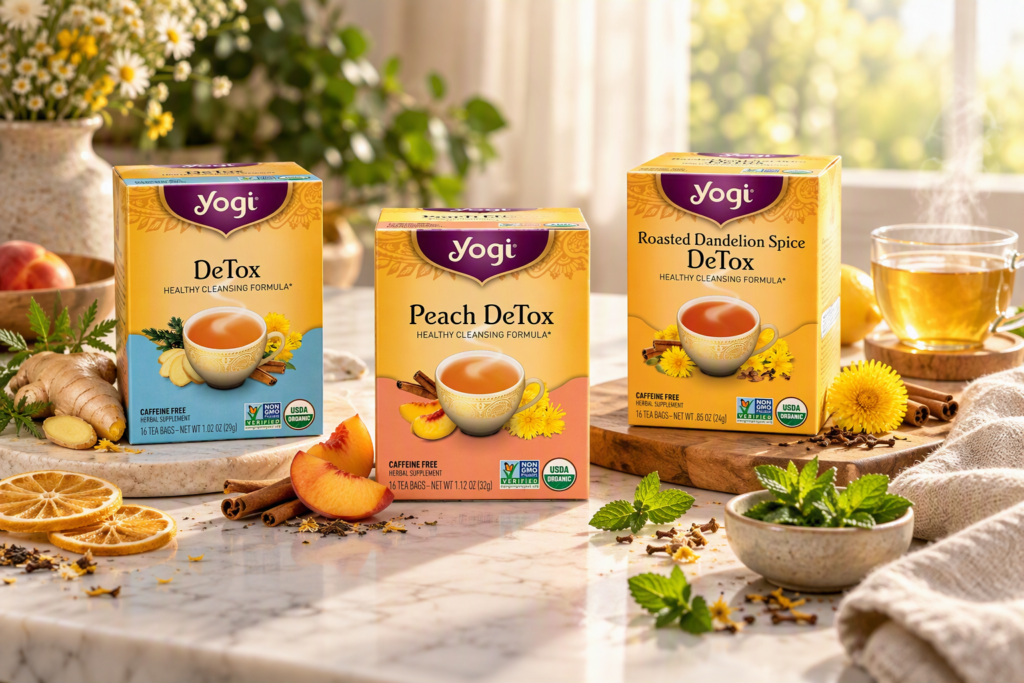
If you enjoy the flavor of cinnamon, ginger, and other warming spices, Yogi DeTox may be worth exploring.
This herbal blend combines several botanicals to create a more complex flavor than a simple single-ingredient tea. The manufacturer’s description emphasizes its rich, spicy character, which may appeal to people who enjoy chai-inspired herbal beverages.
What Does It Taste Like?
Expect a bold, aromatic profile with warming spice notes and an earthy herbal character. If you generally prefer delicate floral teas or sweet fruit infusions, this blend may taste stronger than you expect.
For the best experience, follow the brewing instructions on the package and adjust the strength within the recommended preparation guidelines.
Key Features
- A blend of herbs and warming spices.
- Caffeine-free according to the manufacturer.
- A distinctive flavor for people who enjoy robust herbal beverages.
- A different experience from lemon-forward or fruity teas.
Pros and Cons
Pros
- Bold, spicy flavor profile.
- Suitable for people who prefer caffeine-free beverages.
- Offers a more complex taste than many simple herbal infusions.
Cons
- The spicy and earthy notes may not suit every palate.
- Contains multiple botanicals, so checking the complete ingredient list is important.
- Herbal ingredients can have side effects or interact with medications.
Who Should Consider It?
Choose this option if you enjoy warming spices and want an herbal tea with a stronger flavor profile.
Do not choose it solely because of the word “detox” on the packaging. The product’s marketing does not establish that it removes toxins or causes weight loss.
Ready to explore this tea?
Check Yogi DeTox Tea on Amazon
2. Traditional Medicinals EveryDay Detox Lemon
Best for: People who prefer bright citrus and aromatic herbal flavors.

If you find heavily spiced teas too intense, a lemon-forward blend may be a better place to start.
Traditional Medicinals EveryDay Detox Lemon combines herbs with lemon myrtle to create a bright, aromatic flavor profile. The citrus character offers a different experience from roasted-root teas or spice-heavy blends.
What Does It Taste Like?
The lemon notes are intended to give this herbal blend a fresher, more citrus-forward character. However, it is still an herbal infusion, so you may notice earthy or botanical flavors rather than the sweetness of lemonade.
You can also explore drinking it chilled if you prefer cold beverages. Prepare and store the tea safely, following appropriate food-handling practices.
Key Features
- Lemon-forward herbal flavor.
- Contains several botanical ingredients.
- Caffeine-free according to the manufacturer.
- An alternative for readers who prefer citrus over warming spices.
Pros and Cons
Pros
- Bright, aromatic flavor profile.
- A useful option for lemon tea enthusiasts.
- Offers variety beyond traditional earthy herbal blends.
Cons
- May taste more herbal than expected.
- Not necessarily sweet like a fruit-flavored drink.
- The product’s name should not be interpreted as proof of a clinical detox effect.
Who Should Consider It?
This blend is worth comparing if you enjoy lemon herbal tea and want something different from strong spice or roasted flavors.
Want to check the current product and packaging?
Shop Traditional Medicinals EveryDay Detox Lemon on Amazon
3. Traditional Medicinals EveryDay Detox Hibiscus & Schisandra Berry
Best for: People who prefer tart, fruity herbal flavors.
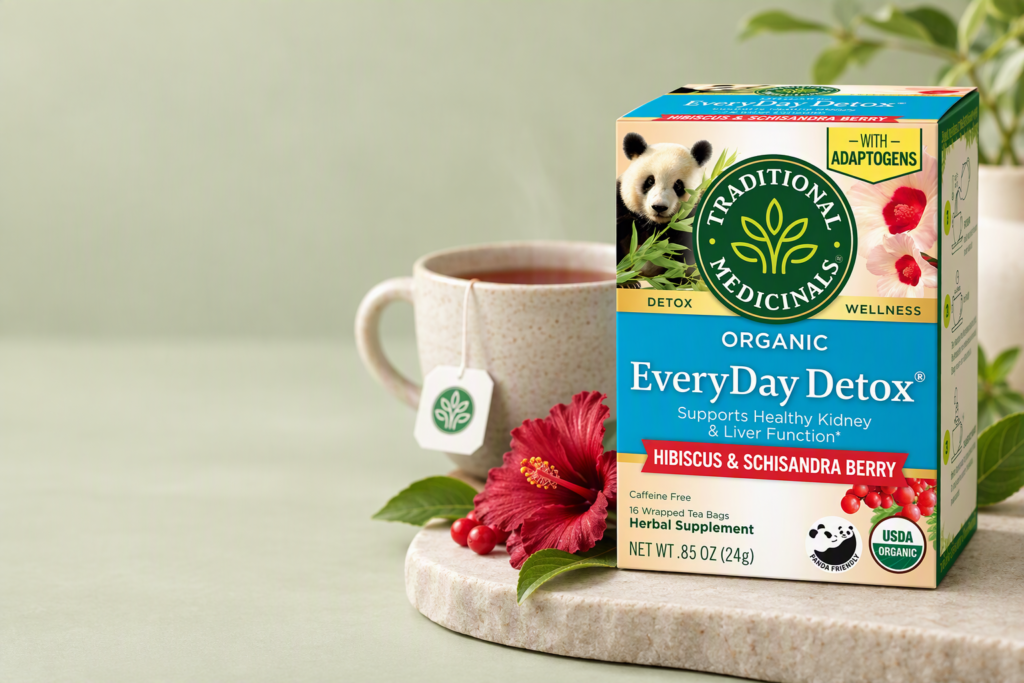
Not everyone enjoys the bitter or earthy character of traditional root-based teas. If you prefer a more vibrant herbal drink, a blend featuring hibiscus and berry ingredients may be more appealing.
Traditional Medicinals describes this variety as tart and slightly sweet.
What Does It Taste Like?
Hibiscus is commonly associated with a tangy, tart flavor, while berry ingredients can add fruit-like notes.
This makes the blend a different choice from a warming spice tea or roasted dandelion root.
The actual experience will depend on your taste preferences and how you prepare the tea. Follow the package instructions rather than assuming that a longer steep automatically produces a better cup.
Key Features
- A tart, fruit-inspired flavor profile.
- Contains hibiscus and schisandra among its listed botanicals.
- Caffeine-free according to the manufacturer.
- An alternative to strongly roasted or spicy herbal blends.
Pros and Cons
Pros
- A different flavor direction from earthy root teas.
- May appeal to people who enjoy tangy herbal beverages.
- Suitable for readers looking for a caffeine-free option.
Cons
- Tartness may not suit people who prefer mild or sweet drinks.
- Flavor descriptions are subjective.
- Some botanicals may be unsuitable for people with particular health conditions or medications.
Who Should Consider It?
Consider this option if you generally enjoy hibiscus tea or tangy fruit-inspired infusions.
As with any herbal product, review the ingredients and warnings before buying.
Interested in this fruity herbal blend?
Check Traditional Medicinals Hibiscus & Schisandra Berry on Amazon →
4. Traditional Medicinals Roasted Dandelion Root Tea
Best for: People who enjoy roasted, nutty, and slightly bitter flavors.

Some people enjoy tea for its gentle, floral character. Others prefer something darker and more robust.
Roasted dandelion root offers a different flavor experience from lighter herbal infusions. Its roasted character may appeal to people who enjoy coffee-like aromas but want to explore a caffeine-free alternative.
What Does It Taste Like?
The manufacturer describes this tea as roasted, slightly nutty, and mildly bitter.
It is not coffee, and it will not provide the same caffeine effect. However, its deeper flavor may be an interesting alternative for people who prefer roasted beverages over citrus or floral notes.
Key Features
- Made with roasted dandelion root.
- A deeper, earthy flavor profile.
- Caffeine-free according to the manufacturer.
- A simple option for people who prefer roasted herbal beverages.
Pros and Cons
Pros
- Roasted flavor that differs from lighter herbal teas.
- A straightforward ingredient profile.
- Suitable for people who want a warm, caffeine-free beverage.
Cons
- The bitterness may not appeal to everyone.
- Does not reproduce coffee’s exact taste or stimulating effects.
- Dandelion products may be unsuitable for certain allergies, medical conditions, or medications.
Who Should Consider It?
If you enjoy dark, roasted flavors, this is a useful option to compare with more traditional herbal blends.
Choose it for its flavor, not because roasted dandelion root has been proven to detoxify the body or burn fat.
Want to explore roasted dandelion root tea?
Check Traditional Medicinals Roasted Dandelion Root on Amazon →
5. Traditional Medicinals Dandelion Leaf & Root Tea
Best for: People who prefer mild, earthy herbal flavors.

If roasted dandelion root sounds too strong, the Dandelion Leaf & Root variety provides a different option to explore.
Traditional Medicinals describes this tea as mild, delicate, earthy, and slightly sweet.
What Does It Taste Like?
Compared with roasted dandelion root, this blend offers a gentler flavor profile according to the manufacturer’s description.
It may be worth considering if you enjoy simple herbal beverages and prefer to avoid the stronger roasted character found in some root teas.
However, “mild” does not mean flavorless. Earthy botanical notes can still be noticeable, depending on your preferences and preparation.
Key Features
- Contains dandelion herb with root.
- Mild, earthy flavor profile.
- Caffeine-free according to the manufacturer.
- An alternative to strongly spiced and roasted blends.
Pros and Cons
Pros
- A gentler flavor profile than roasted dandelion root.
- A simple herbal tea option.
- Suitable for people who prefer subtle botanical flavors.
Cons
- Earthy notes may still be noticeable.
- May seem too mild for people who enjoy bold flavors.
- Dandelion may interact with certain medications or be unsuitable for some health conditions.
Who Should Consider It?
Consider this tea if you prefer a milder herbal beverage and want to compare it with the deeper flavor of roasted dandelion root.
As always, review the specific product label before purchasing.
Ready to compare the current listing?
Check Traditional Medicinals Dandelion Leaf & Root on Amazon →
How to Choose a Detox Tea That Actually Tastes Good
Finding a tea you enjoy starts with your personal preferences—not the strength of its health claims.
1. Start With Your Favorite Flavors
Use these simple comparisons to narrow down your options:
- Prefer citrus? Explore lemon-forward herbal blends.
- Enjoy tart fruit flavors? Look into hibiscus-based infusions.
- Love warming spices? Consider blends with cinnamon and ginger.
- Like roasted drinks? Compare roasted dandelion root.
- Prefer subtle herbal flavors? Explore milder botanical blends.
You do not need to force yourself to drink a tea you dislike simply because it is marketed as a wellness product.
2. Read the Ingredient List Carefully
Look beyond the word “detox” on the packaging.
Check for:
- Laxative ingredients such as senna.
- Ingredients you are allergic or sensitive to.
- Herbs that may interact with medication.
- Added sweeteners or flavorings.
- Preparation instructions and product warnings.
A longer ingredient list does not automatically make a tea more effective.
3. Check the Caffeine Content
If you want a caffeine-free drink, confirm the status of the exact product and variety you plan to buy.
Herbal teas are not all alike. Some blends contain green tea, black tea, or other caffeinated ingredients.
4. Buy a Small Pack First
If you are unsure about the taste, start with a smaller package when available.
Check recent customer reviews for comments about flavor, bitterness, aroma, and preparation. Remember that reviews reflect individual experiences and are not proof of medical benefits.
5. Avoid Extreme Cleanse Claims
Be cautious of teas promising rapid weight loss, a flat stomach in a few days, or dramatic toxin removal.
Some detox products contain laxatives that can cause diarrhea, cramping, and dehydration. A laxative effect is not evidence of fat loss or detoxification.
Do Detox Teas Actually Work?
The answer depends on what you expect them to do.
Herbal tea can be an enjoyable beverage and a way to add variety to your daily fluid intake. Some people also appreciate particular flavors or traditional herbal preparations.
However, evidence supporting commercial detox programs for eliminating toxins or producing lasting weight loss is limited.
Your liver and kidneys already perform important functions in processing substances and eliminating waste. Drinking a special tea is not a proven requirement for keeping these organs functioning.
If you enjoy herbal tea, choose it for its flavor and make it part of a balanced routine. Do not use it as a substitute for nutritious food, adequate hydration, physical activity, or appropriate medical care.
Are Detox Teas Safe to Drink Every Day?
Not every herbal tea is appropriate for everyone.
Safety depends on the ingredients, serving size, your health history, and any medications you take.
Keep these considerations in mind:
- Laxative ingredients: Senna and other stimulant laxatives can cause cramping, diarrhea, and fluid loss. Do not use them as a routine weight-loss strategy.
- Licorice root: This ingredient can cause serious adverse effects in some people, particularly with high or prolonged intake. It may be especially concerning for people with high blood pressure or certain heart or kidney conditions.
- Dandelion and other botanicals: These may be unsuitable for some people with allergies, medical conditions, or medication regimens.
- Pregnancy and breastfeeding: Consult a qualified healthcare professional before using herbal products.
- Existing health conditions: Ask a healthcare professional if you are unsure whether a particular blend is suitable for you.
Follow the instructions on the specific product package. Natural and organic ingredients are not automatically risk-free.
If you experience persistent digestive symptoms or unexplained changes in weight, seek appropriate medical advice rather than relying on a detox product.
Frequently Asked Questions
What is the best-tasting detox tea?
There is no single best-tasting tea for everyone. Citrus lovers may prefer a lemon-forward blend, while people who enjoy bold spices may prefer Yogi DeTox. Those who like roasted flavors may prefer roasted dandelion root tea.
Which detox tea tastes sweet rather than bitter?
Traditional Medicinals describes its Dandelion Leaf & Root tea as mild and slightly sweet, while its Hibiscus & Schisandra Berry blend is described as tart and slightly sweet. These are manufacturer descriptions, and individual taste preferences vary.
Are detox teas caffeine-free?
Some are, but not all. The five products compared here are described as caffeine-free by their manufacturers. Always check the label of the exact variety you intend to purchase.
Can detox tea help with weight loss?
There is insufficient evidence that commercial detox teas produce lasting weight loss. Short-term changes on the scale may reflect fluid loss or other temporary changes rather than fat loss.
Can I drink herbal tea before bed?
A caffeine-free herbal tea may be an enjoyable evening beverage if its ingredients are appropriate for you. However, caffeine-free does not automatically mean suitable for everyone before bedtime. Check the ingredients and follow the package instructions.
How long should I drink detox tea?
There is no universal detox-tea schedule that has been proven necessary for health. Follow the directions for the specific product rather than assuming every blend should be consumed for a set number of days.
Is detox tea better than regular herbal tea?
The word “detox” is often used as a marketing term. It does not establish that a product is clinically proven to remove toxins or deliver a particular health outcome. Choose tea based on its ingredients, flavor, and suitability for your needs.
Final Thoughts: Choose a Tea You’ll Actually Enjoy
The best detox teas that taste good are not necessarily the products with the boldest wellness promises. They are the ones whose flavors and ingredients suit your preferences.
For citrus notes, explore Traditional Medicinals EveryDay Detox Lemon. If you enjoy tangy herbal beverages, compare the Hibiscus & Schisandra Berry blend. Yogi DeTox may appeal to people who enjoy warming spices, while roasted dandelion root offers a deeper flavor. For a milder option, consider Dandelion Leaf & Root.
Before purchasing, check the current product listing, ingredient information, warnings, and availability.
Most importantly, remember that herbal tea can be part of an enjoyable daily routine without promising a cleanse, rapid weight loss, or dramatic health changes.
Choose the flavor you look forward to drinking, understand what’s in your cup, and make wellness decisions based on reliable information.
References and Further Reading
- National Center for Complementary and Integrative Health — Tea
- Yogi Tea — DeTox
- Traditional Medicinals — EveryDay Detox Lemon
- Traditional Medicinals — EveryDay Detox Hibiscus & Schisandra Berry
- Traditional Medicinals — Roasted Dandelion Root
- Traditional Medicinals — Dandelion Leaf & Root
Editorial note: Product descriptions and flavor profiles are based on manufacturer materials. Fit Beauty Guide has not independently taste-tested these products for this comparison. Product formulations and availability may change.
Affiliate Disclosure: As an Amazon Associate, Fit Beauty Guide earns from qualifying purchases. This means I may earn a commission if you buy through links in this article, at no additional cost to you.